Gator Grip Hobby Acrylic Glue Thin Blend Review
Published on
August 23, 2014

How does 1 employ mucilage in a small area with maximum control over the quantity practical and with precise application? Glue Looper has provided a tool that addresses both location and quantity.
Please note that Mucilage Looper provides very articulate and specific instructions for the use of the production, so you won't see a lengthy repeat of those instructions in this review. Also, please annotation that Glue Looper provides a "how to" video on their website. Nosotros all know that a picture, in this case a "movie," is worth a 1000 words, and then take advantage of this video prior to using Glue Looper. Go to http://www.creativedynamicllc.com to view the video.
Just a few words near the video, around second 37 you will note that the modeler seems to dip the applicator into a drop of super gum and then gently scrub the applicator on the edge of the white cap beingness used as the "work station". The modeler is actually wicking abroad what he thinks is excessive glue. Just similar in brush painting, 1 wants to end up in a "Goldilocks" situation… not too much, not too little, just but right. With some basic experience using the Glue Looper, yous will brainstorm to wick away surplus glue virtually without thinking nearly it, but until experience kicks in, it is all-time to actually "think about it." The modeler uses this wicking motion once more at the i:thirty mark.
Finally, note that the modeler turns the Mucilage Looper 90 degrees (think sideways) when loading the loop.
A couple of other tips that Glue Looper includes in their literature are:
- Be gentle and simply touch the loop caput to the seam of the parts. The gum will flow into the seam without whatsoever movement of the loop caput being necessary. It is not necessary to drag the loop along the seam.
- Do not utilize the Loop on its side. You ca load the glue by dipping the Looper into the glue on its side, as seen in the video, simply do not employ the glue by turning the Looper on its side.
I learned from the Mucilage Looper folks that Version ii of the Looper (I am reviewing the V2 particular) differs from V1 by the addition of a small groove extending away from the glue loop. The glue really wicks into the groove much similar a paint wash follows a panel line, and it then provides an even menses of gum into the seam when being applied.
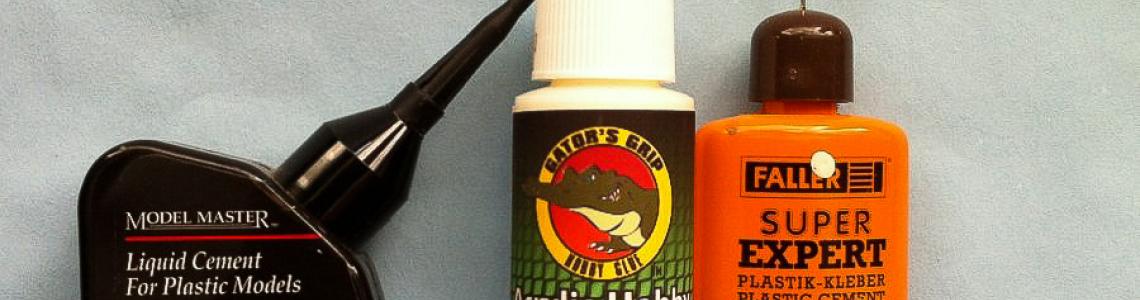
Of course, I couldn't leave well enough lone and had to mess with some non-super glue adhesives to come across if Mucilage Looper works with them. I tested Faller Super Expert glue, Model Master Liquid Cement and Gator's Grip Acrylic Hobby Gum -Sparse Blend. I squeezed a sample of three unlike glues out and used the S Mucilage Looper (small) to apply each to a seam. Mucilage Looper applied each of the 3 with some degree of success. Faller and Model Primary Liquid Cement are, by their nature, thicker than the sparse blend of Super Mucilage which Glue Looper suggests, but the application process worked, although I had to drag the Glue Looper along the seam due to the thickness of the "tube" glues. The Gator's Grip Thin Blend went on well because it is thinner than the other two tested glues.
Glue Looper did something very creative here, and it resulted in a tool that is easy to utilize and functions well. Mucilage Looper provides three sizes of loop from small to large, and so the proper loop size is bachelor for anything from very fine work up to attaching hulls, fuselages, or superstructure. It's all good!
This product is easy to use, can be used effectively by modelers of all feel levels, and is reasonably priced. One gets four loops of each size in the bundle I'm reviewing. I highly recommend this product and thank Creative Dynamic LLC for the review sample.
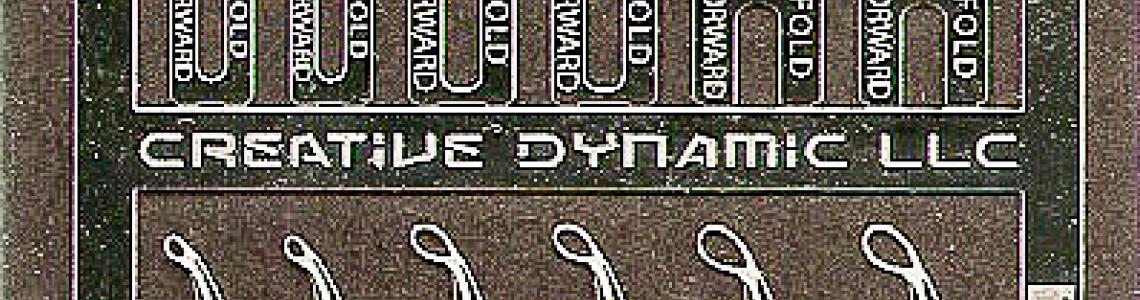
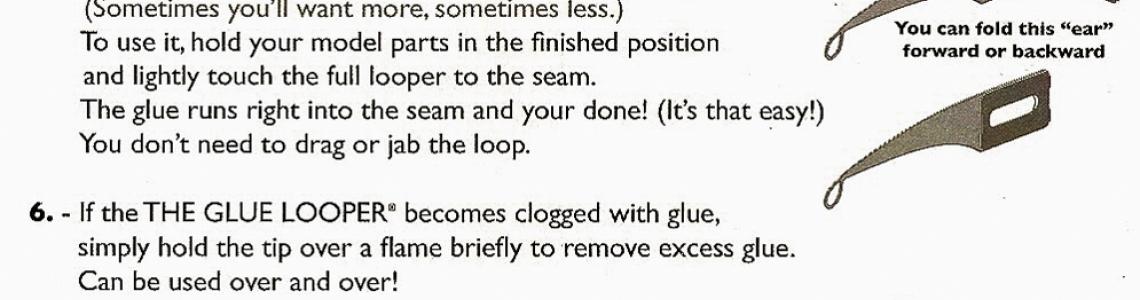

The Glue Looper Mounted in Hobby Pocketknife Handle
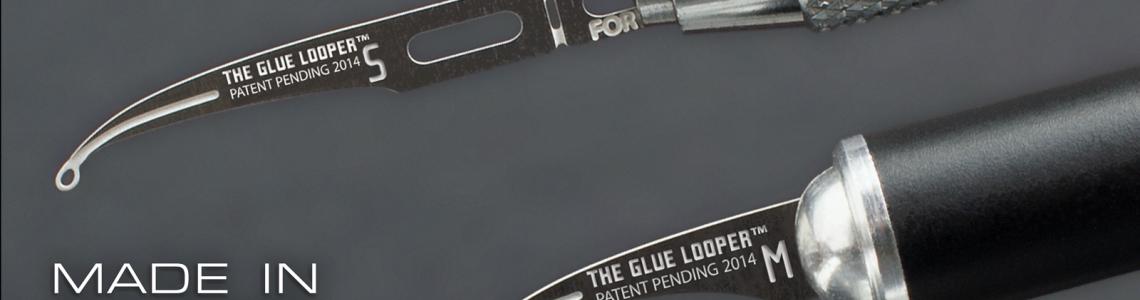
The Glue Looper in Small and Medium Sizes
Previous Next
Source: https://reviews.ipmsusa.org/review/glue-looper

Post a Comment for "Gator Grip Hobby Acrylic Glue Thin Blend Review"